One would always find Dad wearing double pleated trousers, crisp white shirts, and brown Bata Jubilee chappals (or black dress shoes, if the occasion called for them). He did not spend on himself. All of his belongings were purchased by Mom, and Dad took great care to ensure their longevity, as evident in his decade-old spectacle frames or the watch he wore for 15+ years. Even once his daughters started earning, he forbade us from buying him anything – “Naa mera Raja Beta, I don’t need this. You invest the money, that is a much better way to spend this amount.”
He was selfless. Even when finances were tight, he purchased a high quality laptop for each of the six children in our paternal family before each of us started engineering college (and never owned one himself till I surprised him with it in 2016, in my first year as a working professional). Good education and hard work were paramount. He lived a rich life filled with acquiring, applying and disseminating knowledge, and enabled those around him to do the same.
Dad was naturally inclined to intellectual pursuits. His interests ran the entire gamut of local, national, and international affairs (“desh-duniya ki khabarein“), national and international policy, defence, technology, finance, infrastructure, medicine, what have you. I learned something new from him in every conversation everyday. Some believe (and have suggested to me) that having an active social life leads to a well-informed mind. I have never found this to be a good reason to socialise, because my daily conversations with Dad not only taught me aplenty, but also inspired me to seek more knowledge. He was brilliant as the Sun.
Our Eya shares that he was intellectually gifted from his young years. The daughter of a then-MLA in Jamshedpur once complained that Dad outranked her younger brother in class because the teacher had unduly favoured him. Angered with this accusation, and confident about Dad’s brilliance, Nirmala Kaur Teacher challenged the girl (who was older than Dad) to compete live on a test with him: “Tum likho mere saamne. Aur ye likhega. Kaun kitna likhta hai aur kya likhta hai.” (“Both of you take a test live. We shall see who writes how much and how well.”) Dad finished the test before she could, and scored higher again. The MLA was called to the school by Kaur Teacher – “Phir aapke saamne dete hain likhne ko” (“I can conduct another live test in front of you if you’d like”) – The MLA left after a folded-hands apology to the teacher.
Dad attended the prestigious Netarhat Boarding School in Bihar (now in Jharkhand) during his middle and high school years. Only 60 boys would be selected in an academic year from all of Bihar (which included Jharkhand at the time) to join Netarhat, most of whom went on to become luminaries in their respective fields — Dad ranked 20th in his selection.
A few years later, it was my uncle’s turn to interview at Netarhat. When he shared that his older brother was at Netarhat, the interviewer, Mangal Pandey Teacher of Mathematics, recalled Dad’s interview performance: “Tumhara bhai toh aag hai. Muh se sawaal nikalta tha, jawaab deta tha. Muh se sawaal nikalta tha, jawaab deta tha.” (“Your brother is fire. I had barely completed stating my questions when he would respond back with the answers. This was the case for each question.”)
He went on to become a Gold medalist in M.A. Economics from Jawaharlal Nehru University, New Delhi, and went on to join the Indian Administrative Service (IAS) in 1985, while also being awarded a gold medal for his performance during IAS training at the LBSNAA, Mussoorie. He inculcated an appreciation for Mathematics and the Sciences (and specifically Computer Science) in both of his daughters from early ages. As early as four years old, when asked what we would like to become when we grew up, “computer scientists” was our default reply.
–
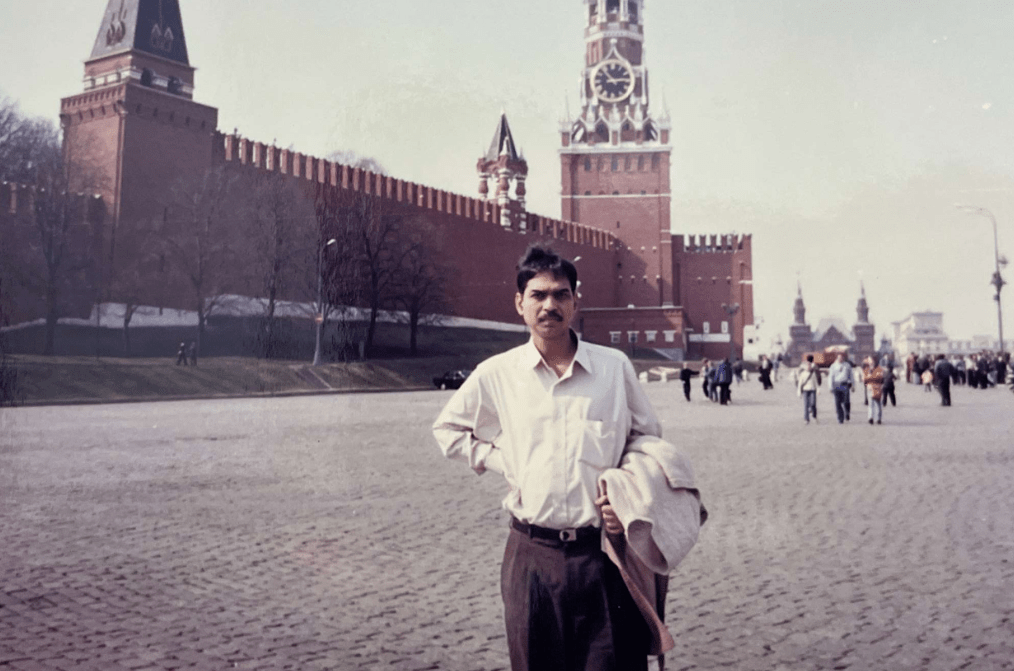
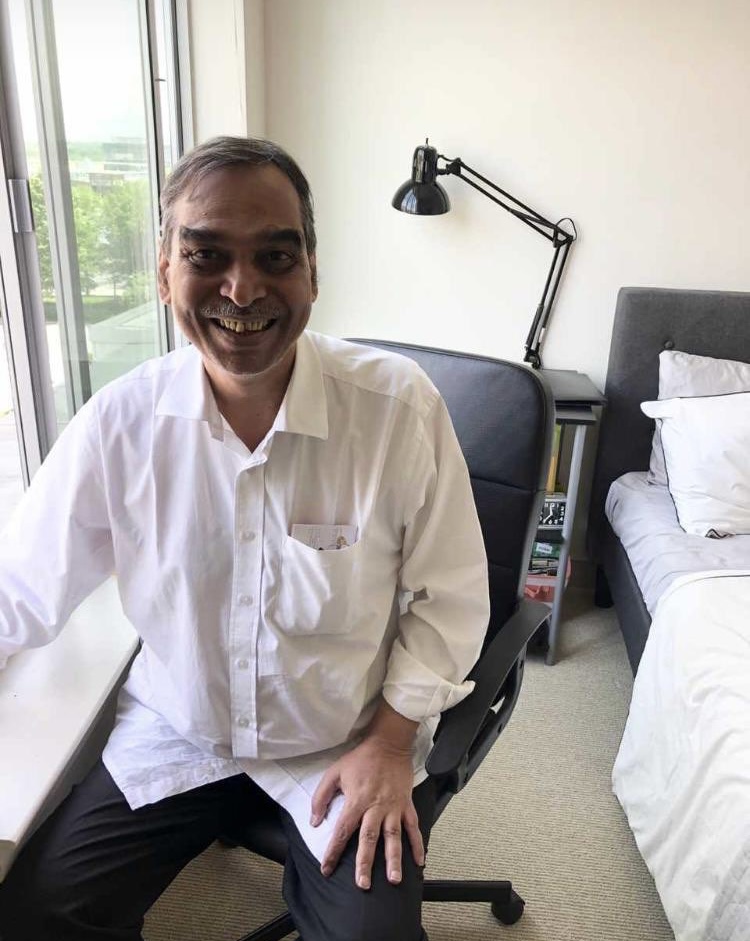
 Late Shri Arvind Kumar, IAS (Retired)
Leave a comment